
GP-Extreme 12W Thermal Pad, 80 x 40 x 0.5 mm
12 W/mK · 80 × 40 × 0.5 mm
4.7 3,062 ratingscounted across all 5 thicknesses of this sheet size

Case Fans
4.2 578 ratings
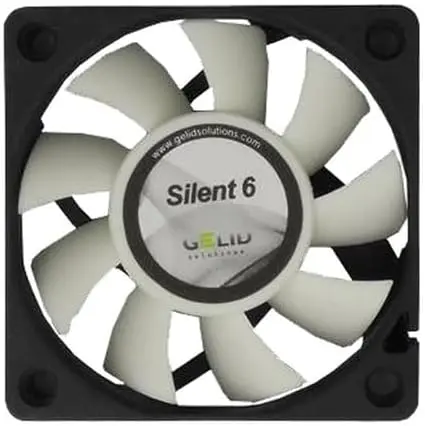
Silent 6: a 60 x 60 x 15.5 mm fan turning 3200 rpm for 16 CFM at 24 dBA, hydro bearing, 3-pin.
$9.90
Low stock at our retail partner
Sold and shipped by an authorized retail partner. Price shown was current when this page was built.
Check price and buySixty millimeters is the classic small-equipment size: rack switches, DVRs, older power supplies, amplifiers and the ventilated compartments of all sorts of gear built before large slow fans became fashionable. This one moves 16 CFM at 3200 rpm on a hydro-dynamic bearing rated for 50,000 hours at 40 C.
This is the size that fills the back of a great deal of installed equipment. Once a device is in a rack or under a desk it tends to stay there for a decade, which means the fan inside it is often the oldest moving part in the building. Replacing it is routine maintenance that almost nobody schedules.
A fan blowing into open space moves its rated volume. The same fan behind a dust filter or a dense grille moves considerably less, because the resistance is what it has to push against. If the intake is restricted, expect real airflow below the figure on the box, and clean the filter before blaming the fan.
With three wires the fan reports its speed and takes whatever voltage the header supplies. Motherboards can still slow it down by reducing that voltage if the header supports it, which most do. Four-pin control is finer, but for a fan in a piece of equipment rather than a PC, three is usually all there is to connect to anyway.
Dust builds up on the leading edge of each blade and changes its shape, which quietly reduces airflow long before anything sounds wrong. A soft brush and a moment of care restores more than people expect. Hold the impeller still while blowing it out; spinning a fan with compressed air can drive it well past its rated speed.
12 W/mK · 80 × 40 × 0.5 mm
4.7 3,062 ratingscounted across all 5 thicknesses of this sheet size
1 g syringe
4.6 2,957 ratingscounted across all 2 pack sizes of this compound
15 W/mK · 90 × 50 × 0.5 mm
4.7 1,021 ratingscounted across all 5 thicknesses of this sheet size
15 W/mK · 90 × 50 × 0.5 mm · 2 sheets
4.8 734 ratingscounted across all 4 thicknesses of this sheet size


